

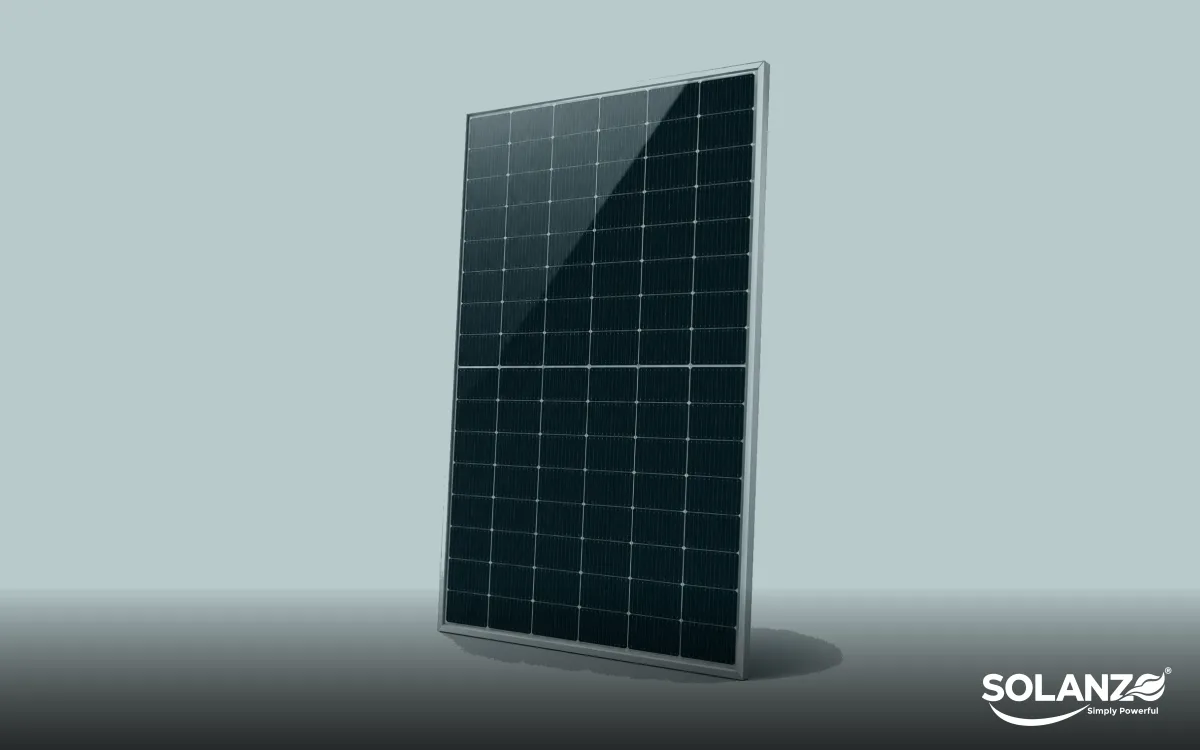
Solar modules used to be one-sided by definition. The new generation arriving on price lists this year is not: bifacial panels generate from light falling on the rear as well as the front, and the physics is more useful than the brochure term suggests.
Where the rear power comes from
Light that misses the module or passes through cell gaps hits the ground and bounces. A bifacial module harvests that albedo with a rear cell face, adding rear-side generation on top of the front rating. How much depends on the ground: dark soil might return 10 to 15 percent, grass more, sand, gravel or white membrane substantially more. The industry's shorthand is the bifaciality factor, the ratio of rear efficiency to front, which on good modules already exceeds 70 percent.
Where it pays, and where it does not
- Raised mounts and trackers benefit most: elevation gives the rear face a clear view of the ground.
- Light surfaces multiply the gain; sand and pale roofing are effectively free extra modules.
- Flush roof mounting gains almost nothing; a dark roof an inch from the rear face reflects little to harvest.
For ground-mounted pumping arrays, which are exactly the installations we design, bifacial is the first module technology in years worth a genuine second look. On pale, dry ground with the array raised to normal mounting height, the rear side quietly adds a working season of extra water.