

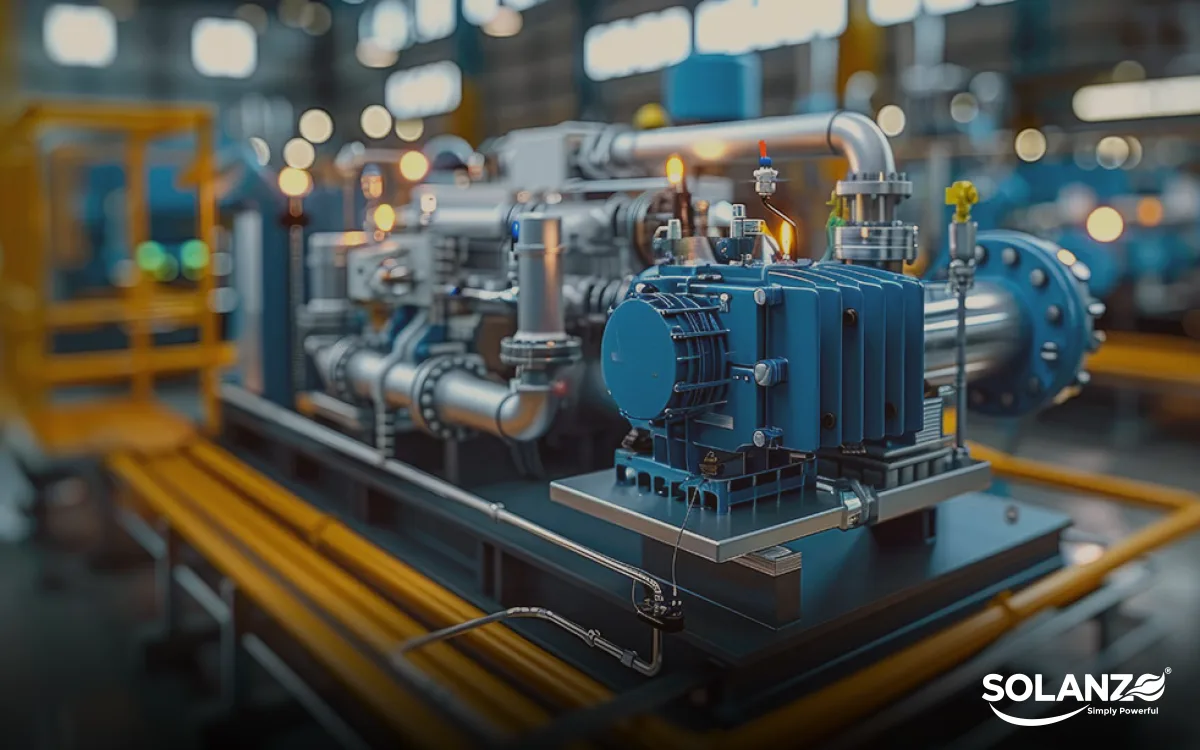
Every Solanzo pump follows the same path through our Turin facility, whether it is a domestic jet pump or a multistage unit for a municipal project. This is what that path looks like today.
1. Cast and incoming inspection
Casings and impellers arrive from our foundry partners and pass incoming inspection before machining: metallurgy certificates verified, casting integrity checked, critical surfaces measured. A defect caught here costs minutes; the same defect in the field costs a reputation.
2. Machining
CNC cells bring the castings to tolerance: volutes, seal housings, impeller bores. Hydraulic surfaces that determine efficiency are finished to the tolerances the design calls for, and the measuring happens in-process rather than after the fact.
3. Balancing
Every rotating assembly is dynamically balanced. The residual imbalance target is what decides whether a pump hums or rattles fifteen years in; vibration is not a cosmetic defect, it is a wear mechanism.
4. Assembly and seal fitting
Mechanical seals, bearings, motor and hydraulics come together on the assembly line with torque and procedure documented per station. The people who build the pumps also sign the build record.
5. The test bench
Every unit runs before it ships: flow, head and power measured across the curve against the published performance, plus the electrical and leak checks that happen on all of them. What misses its numbers does not leave with them.
Then the pump goes into a box, onto a pallet, and out to a partner somewhere in the world. The sequence has not changed since the workshop years; the discipline around it is what a company is actually made of.