

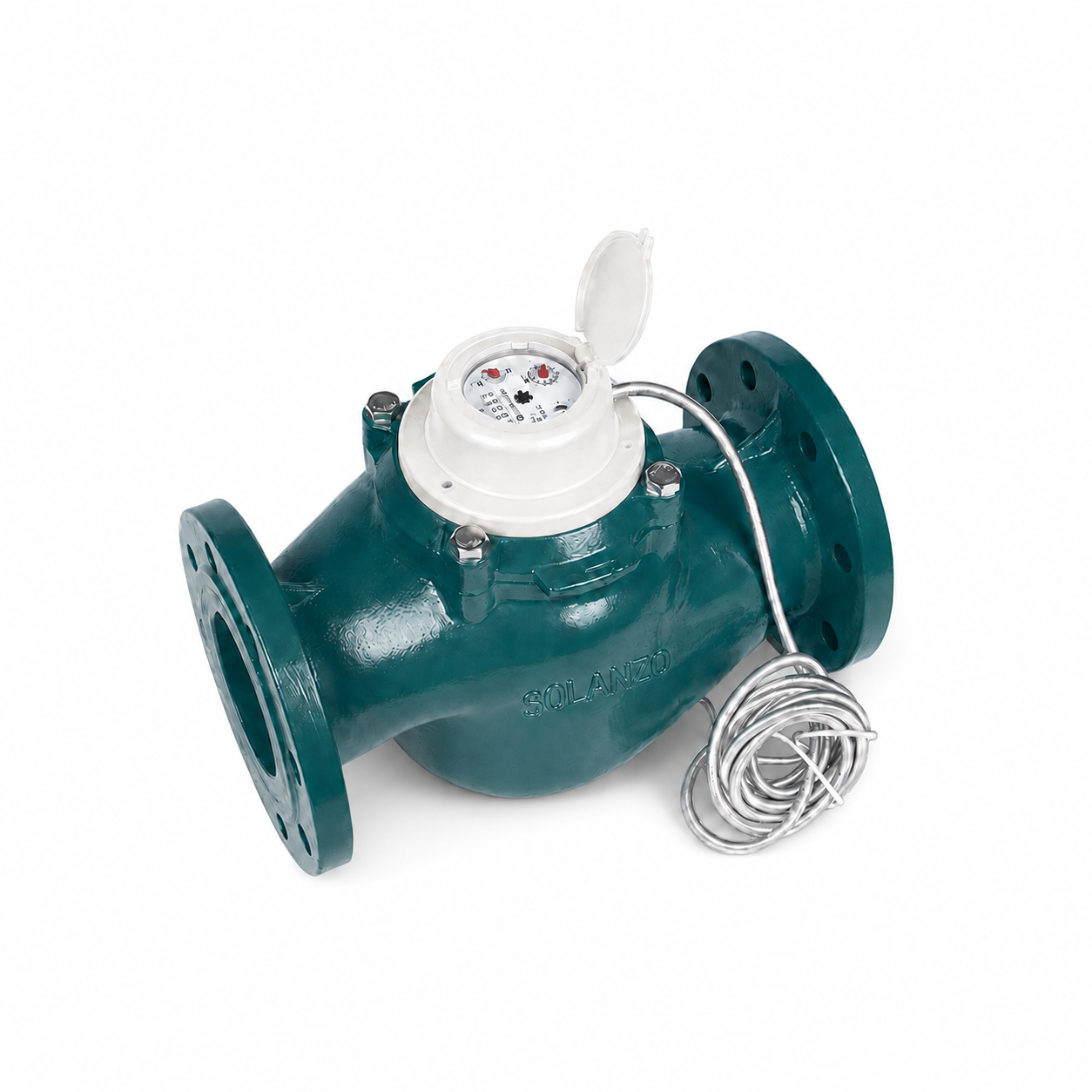
For most utilities, the water meter is measured in metres of piping but read in footsteps. A reader walks route after route, writes down digits, and types them back at the office. Every step of that chain costs money and breeds errors. Wired remote reading removes both problems in one stroke.
How remote reading works
The meter gains a communication module, typically M-Bus (Meter-Bus, the European standard) or RS-485, linking it over a simple two-wire cable to a concentrator. One technician, one handheld unit, one staircase: hundreds of apartments read in minutes. The digits travel electrically, so transcription error, historically one of the largest sources of billing disputes, disappears entirely.
The savings are structural
- Labour. Reading routes shrink from days to hours, and inaccessible meters in locked shops or sealed basements no longer need appointments.
- Accuracy. Non-magnetic sensing with high R-class ratios keeps billing honest down to a trickle, catching low flows that old mechanical meters simply miss.
- Non-revenue water. Frequent, timestamped reads expose night-time leakage zones that monthly manual reads can never reveal.
- Billing disputes. "The meter says" ends arguments that estimates start.
Wired versus radio
Wireless reading suits scattered rural meters. For apartment blocks, industrial sites and district metering, though, a wired M-Bus loop is bulletproof: no batteries, no radio shadows, no interference, and a service life matching the meter itself.
The Solanzo position
Our WS Series bulk water meters ship with non-magnetic sensing and M-Bus or RS-485 outputs precisely because the utility business case is no longer debatable. The cheapest reading is the one nobody had to walk to.