

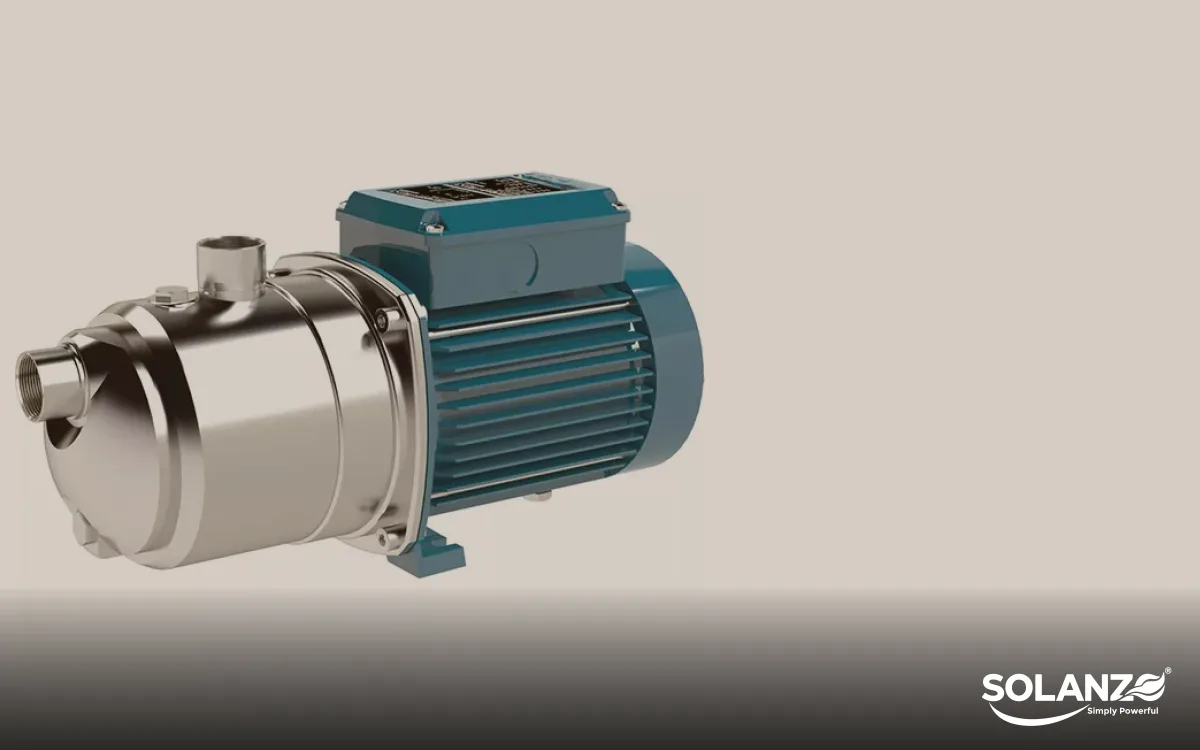
Rainwater harvesting systems fail quietly. The tank fills, the gutters work, and the water sits unused because the pump makes it awkward: too weak for the garden hose, too noisy under the kitchen window, or tripped by the first dry spell.
What the pump must actually do
Garden irrigation, toilet flushing, washing machines: each application has a pressure floor. Irrigation lines typically want 2 to 3.5 bar; a house feed wants steady pressure indistinguishable from the mains. A pump chosen for price rather than duty turns stored rain into a second-rate supply nobody wants to use.
Three features that decide success
- Self-priming or submerged. Cistern water sits low; the pump either pulls it up reliably or lives inside it. Self-priming jet pumps serve shallow tanks; a submersible in the cistern removes the priming question entirely.
- Dry-run protection. Tanks empty in dry weeks, which is precisely when demand peaks. A pump that protects itself survives the season; one that does not becomes the reason the system gets abandoned.
- Quiet pressure control. Systems feeding a house should hold constant pressure without audible cycling. A pressure vessel or variable-speed control decides whether the occupants ever think about the pump at all.
Harvested rain only offsets the water bill if people actually use it. Specify the pump as carefully as the tank and the system earns its keep; skimp on it and you have bought a very large garden ornament.