

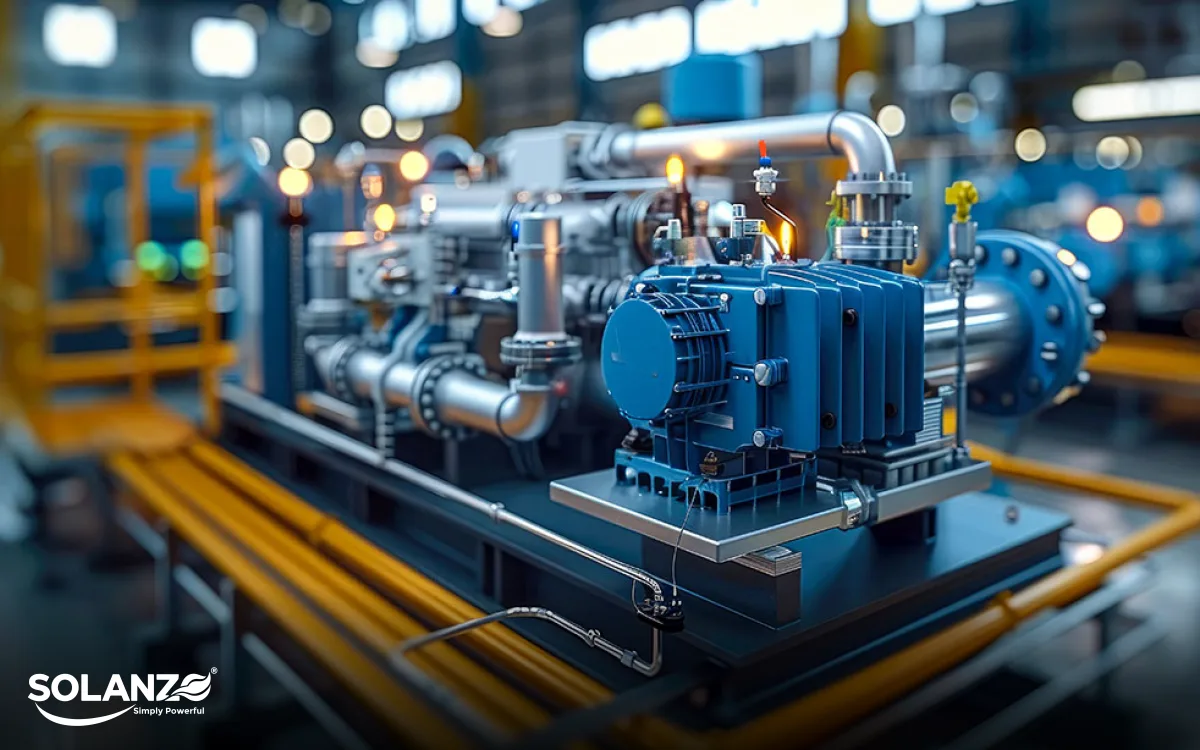
We service pumps in beautiful plant rooms and in holes under staircases. The difference in lifetime cost between the two is larger than the difference between pump brands. A few decisions at design stage decide which one you end up with.
Access is the first specification
Every pump will one day need a seal, a bearing or a full pull-out. Leave a clear working area around each unit, a door or hatch wide enough to remove the largest component, and headroom for whatever must lift vertically. A pump that cannot be reached gets repaired late, maintained rarely and replaced early.
Air and water
- Ventilation. Motors reject heat into the room; an unventilated plant room in summer quietly cooks insulation. Air in low, air out high.
- Drainage. Every pump room will see water: a weeping seal, a blown joint, a maintenance drain-down. A floor drain and a threshold keep a drip from becoming a flood.
- Lighting and power. A technician working by phone-torch makes mistakes. Decent light and a socket near the units are trivial costs.
The mistake we see most
Pumps shoehorned into leftover space after everything else is designed. Water systems serve the building for decades; give them a room, not a cupboard, and they will repay the floor area in service hours alone.