

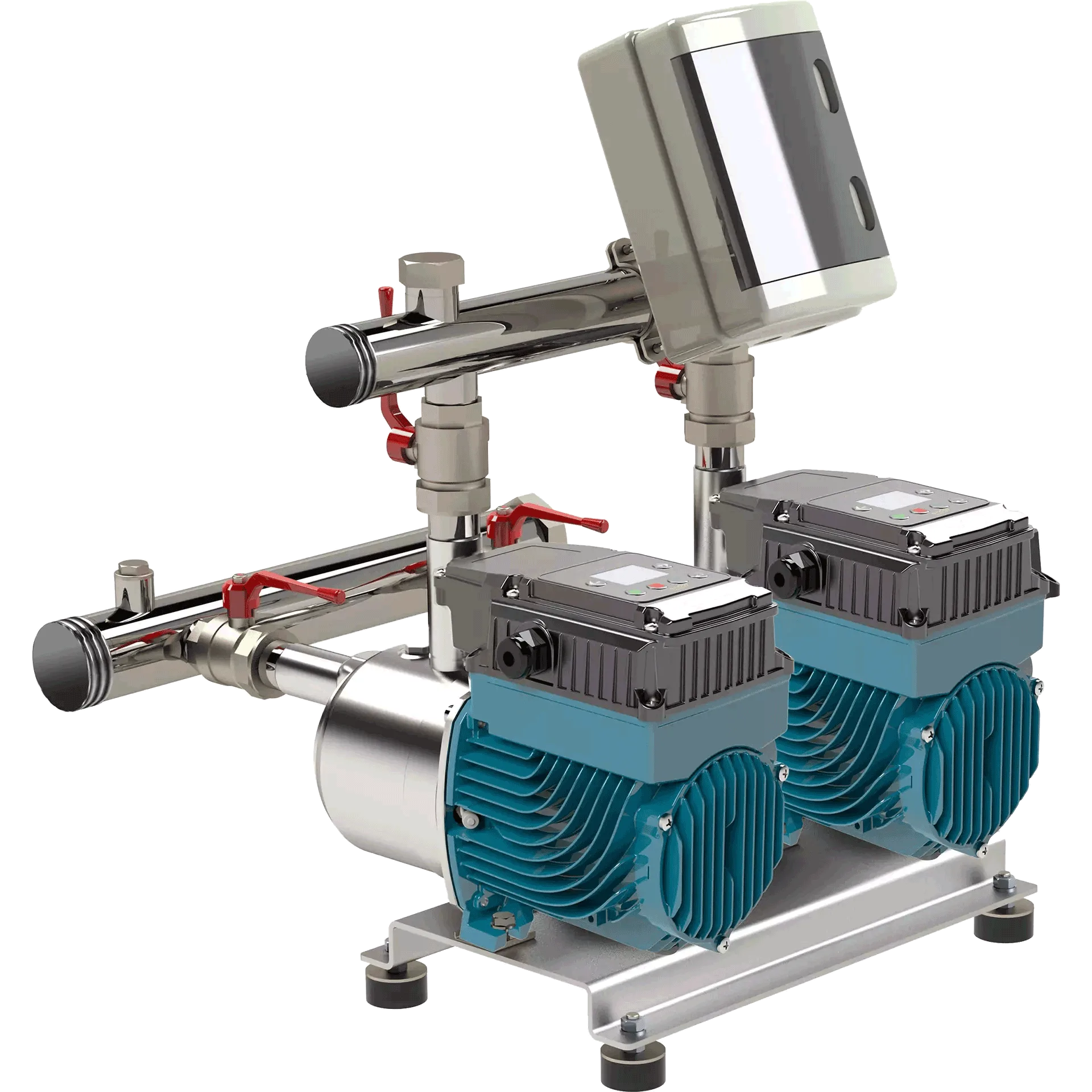
Every metre of building height costs about 0.1 bar of pressure. A town supply that arrives at a comfortable 3 bar gives the fifth floor a weak shower and the tenth floor barely a whisper. Fixing this is what pressure boosting exists for, and done properly it is invisible to the occupants.
Start with the pressure budget
Calculate what the top floor actually needs: fixture pressure (about 1.5–2 bar at the tap) plus the height in metres divided by ten, plus friction in the rising main. Compare that to the guaranteed minimum supply pressure, and the difference is what the booster must add. No more than that: oversized boosters are as troublesome as undersized ones.
Zone the building
Pumping every floor to the pressure the penthouse needs over-pressurises the lower levels, wasting energy and stressing fittings. Tall buildings are divided into pressure zones, each with its own booster or a pressure-reducing valve. As a rule of thumb, keep each zone within roughly 30 metres of height difference.
The break tank question
Most regulations require an air gap between the mains and the booster, usually a small break tank, so the pump can never draw the municipal supply below zero. The tank also buffers peak demand, letting a modest pump serve a large building.
Fixed speed or variable?
Conventional sets switch pumps on and off against a pressure switch. Simple, but the pressure swings and the pumps cycle hard at low demand. Variable-speed boosters hold pressure constant at every flow, cutting energy use dramatically and silencing the characteristic hammer of cycling pumps. In buildings with wildly varying demand, hotels and apartments especially, variable speed pays for itself quickly.
Specify once, enjoy for decades
A correctly zoned, correctly sized booster set disappears into the plant room and delivers quiet, constant pressure for twenty years. Get the pressure budget wrong and it becomes the most complained-about machine in the building. This is one calculation worth doing carefully.